

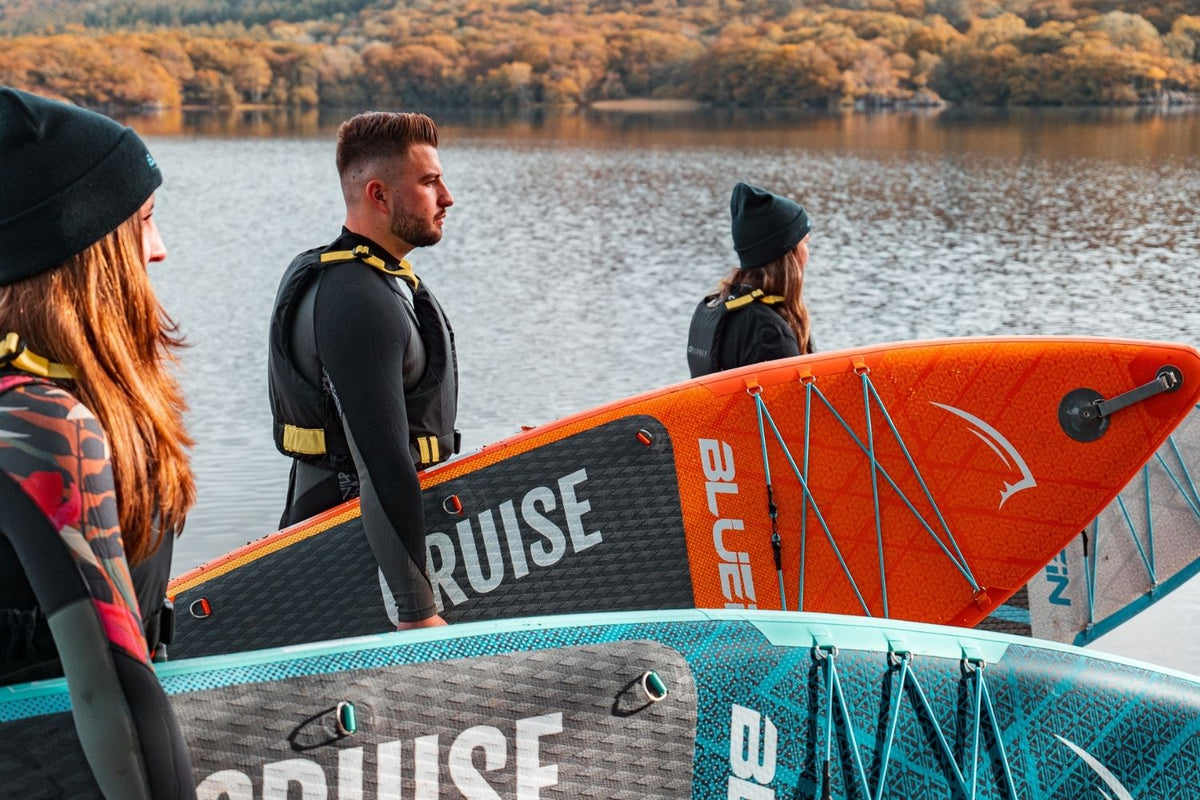
September changes the atmosphere on Europe's waterways. Summer crowds begin to thin, forests start edging towards autumn colour and mornings become cooler and quieter. For paddlers willing to pack an extra layer and plan around shorter days, early autumn paddleboarding Europe adventures can deliver some of the most atmospheric sessions of the year. From the broad waters of Germany's lakes to the mountains surrounding Austria, Slovenia, France and northern Italy, autumn creates a natural combination of scenic touring and wildlife watching. The season also demands more planning. European paddleboarding rules vary between countries, regions and even individual lakes, while water temperatures and mountain weather can change faster than many summer visitors expect. Preparation is what turns a beautiful location into a good paddle.

Why Early Autumn Paddleboarding in Europe Feels Different
July and August are obvious choices for a European SUP holiday, but they are not always the best months for paddlers who value peace and scenery. Popular beaches become crowded. Boat traffic increases. Parking and launch points become busier. Midday temperatures can make long paddles uncomfortable. Early autumn can change all of that.
Potential advantages include:
Quieter lakes and launch areas after peak holiday season.
Cooler temperatures for longer touring sessions.
Early autumn colours around forests and Alpine valleys.
Low morning light creating dramatic mountain reflections.
Increased opportunities for observing migrating waterbirds.
Easier access to some popular tourism areas.
A calmer, slower atmosphere compared with midsummer.
September is especially appealing because it sits between seasons. You may still experience warm, sunny days while getting the quieter feel usually associated with autumn. That combination explains why experienced paddlers often keep their boards accessible long after the main summer holiday period ends.
Autumn Wildlife From a Paddleboard
Europe lies across major migratory routes used by birds travelling between breeding and wintering areas. Wetlands, estuaries, lakes and river systems therefore become important places for wildlife during autumn. A SUP can provide an excellent observation platform because it moves quietly, but quiet does not automatically mean harmless. A paddleboard can still disturb wildlife if it approaches resting or feeding animals too closely.
Birds on the Move
Depending on your destination, autumn paddles may produce sightings of:
Ducks gathering on lakes and wetlands.
Herons and egrets around shallow water.
Cormorants resting on rocks, posts and islands.
Migrating geese.
Waders feeding around shorelines and wetlands.
Birds of prey above forests and valleys.
Large flocks passing overhead during migration.
Europe's wetlands form an interconnected network for migratory wildlife, which makes responsible behaviour especially important at stopping and feeding sites. Give groups of birds plenty of room, particularly when they are gathered on shallow water or islands.
Shoreline Mammals
Forest-fringed lakes can also offer glimpses of deer and other mammals, particularly during quieter parts of the day. Treat sightings as a bonus rather than something to chase. Stay on the water, keep your distance and avoid landing simply because an animal has appeared near the shoreline.
Scenic Autumn SUP Destinations Across Europe
The continent offers an enormous range of paddling environments. The locations below are inspiration rather than automatic launch recommendations. Conditions, seasonal restrictions and access rules should always be checked locally before entering the water.
Destination |
Autumn character |
Why paddlers visit |
Key consideration |
Lake Constance, Germany/Austria/Switzerland |
Wide lake, vineyards and changing foliage |
Touring and open views |
Wind, boat traffic and protected areas |
Mecklenburg Lake District, Germany |
Forests and interconnected lakes |
Quiet nature-focused routes |
Local nature zones |
Salzkammergut, Austria |
Alpine peaks and clear lakes |
Mountain scenery |
Rapid weather changes |
Lake Bohinj, Slovenia |
Mountains and woodland |
Natural scenery and touring |
Local access rules |
Lake Annecy, France |
Alpine landscape and clear water |
Scenic recreational paddling |
Boat traffic and local regulations |
Northern Italian lakes |
Mountain scenery and large open water |
Touring and dramatic landscapes |
Wind and exposed conditions |

Paddleboarding in Germany During Early Autumn
Germany deserves particular attention for autumn SUP travel. Its combination of large lakes, forest-fringed waterways and extensive inland paddling culture means there are opportunities ranging from relaxed local sessions to multi-day touring.
Lake Constance
Bodensee, or Lake Constance, sits between Germany, Austria and Switzerland and offers an impressive sense of scale. Autumn can bring beautiful light and quieter tourist areas, particularly once the main holiday season passes. However, Lake Constance should be treated as a substantial open body of water rather than a sheltered recreational pond. Weather can change, boat traffic remains relevant and protected shoreline areas need to be respected. Choose a route close to an appropriate shore if you are less experienced, and research the exact launch location before travelling.
Mecklenburg Lake District
For paddlers more interested in forests and wildlife than Alpine peaks, northern Germany provides a different kind of autumn experience. The Mecklenburg Lake District's network of lakes and waterways creates opportunities for slow touring through wooded landscapes. This is precisely the type of environment where a shorter route with time for observation can be more rewarding than chasing kilometres. Nature protection is particularly important around shallow margins, reed beds and designated conservation areas. Where signs or buoys restrict access, treat them as boundaries rather than suggestions.
Alpine Lake Paddleboarding in Autumn
Austria, Slovenia, France and northern Italy contain some of Europe's most recognisable SUP scenery. Mountains rise almost directly from the water, while still mornings can create reflections that make paddlers reach for their cameras every few metres. The visual calm can be misleading.
Mountain Weather Changes Quickly
A glassy Alpine lake at breakfast can become uncomfortable later in the day as local winds develop. Never assume that yesterday's conditions will repeat themselves today.
Before launching:
Check the local forecast rather than a broad regional forecast.
Look specifically at wind direction and speed.
Understand whether local mountain winds commonly strengthen later.
Identify alternative landing locations.
Keep your first autumn route conservative.
Early starts often offer advantages, but only when the weather forecast supports them.
Lake Bohinj and Slovenia
Slovenia's mountain landscapes are particularly attractive in autumn. Lake Bohinj offers a more nature-focused atmosphere than many heavily developed resort areas, with forest and mountain scenery surrounding the water. As anywhere in Europe, check the current local rules before arriving with an inflated SUP. Regulations, launch arrangements and protected areas can change.
French Alpine Lakes
French lakes such as Annecy attract paddlers because they combine clear water with impressive mountain surroundings. Once peak summer passes, the experience can feel noticeably less hectic. That does not remove the need to watch for boat traffic, designated activity zones and local rules. If your goal is scenic photography rather than distance, stay closer to shore and build the route around interesting bays and viewpoints.
Northern Italy: Beautiful but Conditions Matter
Northern Italy provides extraordinary landscapes, but large lakes deserve considerable respect. Lake Garda is a good example. It is visually spectacular but also known for changing wind conditions. A confident paddler planning a short, sheltered morning route is approaching the lake very differently from a beginner deciding to cross open water because it looks calm from the beach. Choose the route based on conditions and experience, not the reputation of the destination. That principle applies throughout Europe. The most famous paddleboarding location is not automatically the right one for you today.
Wildlife-Friendly SUP Technique
Autumn wildlife encounters become much more rewarding when you stop trying to force them.
Try treating your paddleboard as a floating hide rather than a pursuit vehicle.
Slow the Paddle Stroke
Fast paddle strokes, repeated direction changes and boards heading directly towards animals are more likely to cause disturbance.
When you spot wildlife:
Reduce your speed.
Angle away rather than travelling directly towards it.
Keep voices low.
Do not repeatedly reposition for photographs.
Give animals a clear escape route.
Avoid entering groups of resting birds.
Never feed wildlife.
A telephoto lens or compact binoculars will produce better encounters than another 20 metres of paddling towards an animal.
Respect Reed Beds and Wetlands
Reed-lined areas can look inviting because they offer shelter from the wind. They are also valuable habitat. Do not force the board through reeds, cut across restricted wetland margins or use sensitive vegetation as an improvised launch point. Launch from established areas where possible and carry your board rather than dragging it across vegetation.
Understand Local Rules Before You Travel
One of the biggest differences between planning a local paddle and a European SUP trip is regulation. There is no single set of paddleboarding rules covering every lake and waterway in Europe. Requirements may be determined nationally, regionally or by the authority responsible for an individual lake.
Before paddling, check:
Whether paddleboards are permitted.
Approved launch locations.
Nature conservation zones.
Seasonal restrictions.
Navigation rules.
Required safety equipment.
Rules concerning buoyancy aids or leashes.
Restrictions around ports and shipping channels.
Local weather warnings.
Parking and shoreline access.
This becomes especially important when travelling between countries. Do not assume that equipment or behaviour considered normal at home automatically satisfies local requirements elsewhere.

What to Pack for an Early Autumn SUP Trip in Europe
Warm weather in the town nearest your destination can give a false impression of conditions on the water. Altitude, wind and water temperature all matter.
A sensible autumn kit could include:
Appropriate personal flotation equipment.
Clothing matched to the water and weather.
Waterproof outer layer.
Spare thermal layer.
Dry bag.
Waterproof phone protection.
Sun protection.
Hat.
Water and snacks.
Whistle.
Compact first-aid kit.
Portable power bank for longer outings.
Offline map or downloaded route information.
Treat spare warm clothing as essential rather than optional, particularly on mountain lakes. If everything goes well, you may never use it. That is exactly the point of emergency equipment.
Choosing a SUP for European Autumn Travel
Travelling by car, rail or campervan changes what you might value in a paddleboard.
Portability can be just as important as pure on-water performance.
Bluefin Lite: When Portability Matters
If your European adventure involves trains, campsites, apartments or longer walks to the water, the Bluefin Lite range is designed around compact, manageable travel. A more portable setup can make spontaneous paddling far easier, particularly when the best launch point is not immediately beside the car.
Bluefin Cruise: A Versatile Travel Companion
Paddlers looking for an all-round setup for mixed recreational use can explore the Bluefin Cruise range. Its versatile character suits the kind of trip where one day could involve a sheltered lake and the next a relaxed touring route. Versatility is valuable when the exact conditions cannot be predicted weeks before a road trip.
Bluefin Carbon: For Touring-Focused Paddlers
If longer distances and touring efficiency are higher priorities, consider the Bluefin Carbon range. A more performance-oriented platform makes sense for paddlers who already have experience and expect to spend several hours exploring larger bodies of water.
Whichever board you choose, durability matters when equipment is repeatedly packed, transported and used across different locations.
Common Autumn SUP Travel Mistakes
Mistake 1: Choosing a Destination Before Checking Conditions
You have driven three hours to reach a famous lake, so you feel committed to paddling. That is exactly when poor decisions can happen. Arriving at the lake does not create an obligation to launch. Walk, hike, explore the town or move to your backup location if conditions are unsuitable.
Mistake 2: Assuming Every Lake Has the Same Rules
A legal launch on one lake tells you nothing about another. Check the specific destination every time.
Mistake 3: Underestimating Large Lakes
From shore, a lake can look safer than the sea because land surrounds it. Large inland water can still produce significant wind, waves and long distances from shelter.
Mistake 4: Packing for the Holiday Rather Than the Paddle
A suitcase containing warm everyday clothing is not necessarily a suitable watersports kit. Pack dedicated paddling layers and keep them dry.
Mistake 5: Disturbing Wildlife for Content
Getting the photograph should never become more important than the animal's welfare. If a bird repeatedly moves away, changes direction or stops feeding because of your approach, increase the distance. The responsible photograph is the one taken without changing the scene.
A Better Way to Plan an Autumn European SUP Day
A good paddling day begins before breakfast.
Use this sequence:
Check the most recent local forecast.
Confirm local access and restrictions.
Choose a route matched to the weakest paddler in the group.
Identify multiple exit points.
Decide your turnaround time before launching.
Pack enough clothing for a significant temperature change.
Tell somebody your intended route.
Reassess conditions at the water.
Once paddling, keep evaluating what you see. Forecasts are useful, but the conditions in front of you always take priority over the conditions predicted on a screen.
Paddle More Slowly and See More
One of the pleasures of autumn paddleboarding is that it encourages you to stop measuring every outing by distance. Try choosing a route only a few kilometres long and deliberately exploring it slowly. Follow the shape of the shore where appropriate. Stop paddling occasionally and listen. Watch the treeline. Look overhead for migrating birds. Notice how the colour of the water changes beneath mountains and forests.
The purpose of exploring does not always have to be reaching somewhere new. Sometimes it is seeing a familiar landscape differently.
Summary: Why Early Autumn Belongs on Your European SUP Calendar
Europe's waterways change character as summer ends. Tourist crowds begin to fall away, woodlands shift colour, mountain mornings become sharper and migratory wildlife starts moving across the continent. That combination makes early autumn paddleboarding Europe trips ideal for paddlers interested in scenery, touring and nature rather than simply hot weather. Success comes from keeping the plan flexible.
Research local restrictions. Watch the wind. Dress for the water. Give wildlife space. Choose a route that fits the conditions you actually find rather than the itinerary you created weeks earlier. Do that and September or early October can become one of the most rewarding times to explore Europe from a paddleboard.
Summer may be the obvious SUP season, but autumn is when many waterways reveal a quieter side.

Compartir:
Autumn Paddleboarding Europe: Balance Work and SUP Time